1/115 Bowden St Meadowbank

Ear Mites In Kittens: Helping Pip Rest Comfortably Again

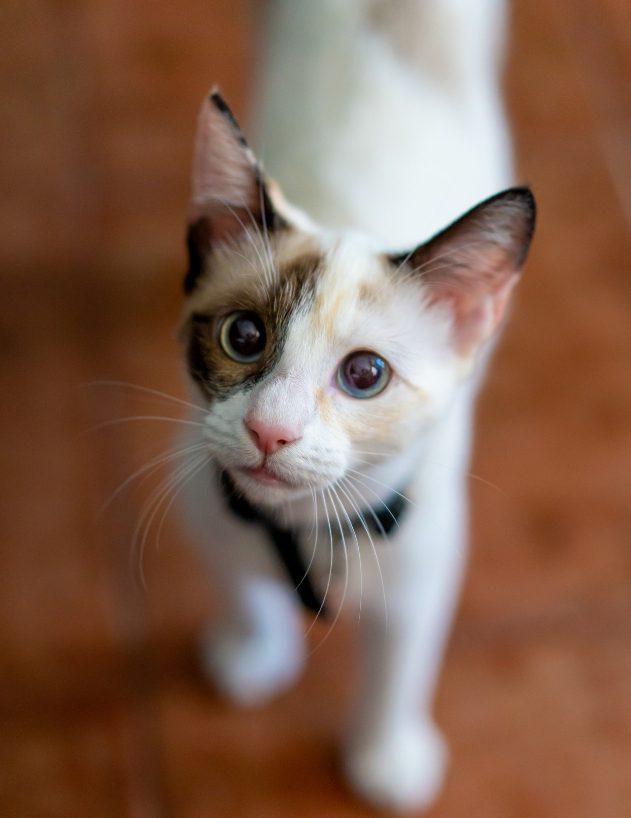
Close-up from above of a white and calico kitten looking directly up at the camera while wearing a black harness on a terracotta tiled floor.

Patient Information

Name: Pip
Age: 12 weeks
Breed: Domestic Shorthair
Gender: Female

Pip, a recently adopted 12-week-old domestic shorthair kitten, was still eating well and staying playful, but her itchy ears were making it hard for her to settle and rest. Her new family noticed she was scratching at both ears, shaking her head, and that there was a dark discharge from them.

Before coming home, Pip had spent time with other kittens, but it wasn’t clear what parasite treatments she’d received. To help her feel comfortable again, we first needed to examine her ears to determine the cause of the irritation.

Looking Beyond The Dark Ear Discharge

On examination, both of Pip’s ear canals were red and filled with dark, waxy debris. She had also scratched the skin around her ear flaps, leaving some shallow marks.

We used an otoscope to look inside Pip’s ears, then collected a small sample of the debris for closer examination under the microscope. By preparing the sample with paraffin oil, we were able to see Otodectes cynotis, the ear mites that were making her so uncomfortable.

This confirmed that Pip had otodectic otitis externa, which is inflammation of the outer ear canals caused by ear mites.

Before deciding on the best treatment, we also needed to check whether Pip had developed a bacterial or yeast infection alongside the mites.

We performed ear cytology by staining a separate sample from Pip’s ear. This test showed there was no significant bacterial or yeast infection, so she didn’t need any additional antimicrobial ear medication.

Treatment Guided By Pip’s Results

Pip was treated with Revolution Plus, a spot-on parasite treatment chosen for her age and body weight. We also gently cleaned away the ear debris she would allow us to, making sure not to cause her any extra stress.

Our nursing team supported Pip with gentle handling, prepared her samples, and took time to go through home care instructions with her owner.

We included advice about treating any other animals Pip had been in contact with, and explained why it’s important to avoid using ear products that haven’t been prescribed. Our goal was to treat the mites while keeping handling and cleaning as gentle and manageable as possible for a young kitten with sore ears.

The test results helped us keep Pip’s treatment focused on what she needed. Her ears were inflamed, but there was no sign that antibacterial or antifungal ear medication would benefit her.

A More Comfortable Kitten At Her Three-Week Review

After treatment, Pip’s scratching and head shaking gradually settled down.

At her three-week review, both ear canals looked much healthier, with less inflammation and debris. The scratches around her ears were healing well, and repeat microscopic examination showed no sign of mites.

Pip was also much more comfortable. She was able to rest peacefully and allowed gentle handling around her ears.

Even though Pip kept her appetite and playful nature throughout, being able to rest without constant scratching made a real difference for her, alongside the visible improvements in her ears.

Concerned About Your Kitten’s Ears?

If your cat is scratching their ears, shaking their head, or you notice dark ear discharge, even if they seem otherwise well, it’s a good idea to arrange an examination. We’re here at True Companion Vets in Meadowbank to check your pet’s ears and talk through the best next steps for your pet.

Have Questions? We're Here To Help.

What Are The Signs Of Ear Mites In Cats?

Ear mites can cause repeated ear scratching, head shaking, redness and dark, waxy ear debris. Scratching may also leave marks around the ear flaps. Pip had these signs in both ears, and the itching was interrupting her rest.

Can A Cat Have Ear Mites While Eating Normally?

Yes, normal appetite and activity do not rule out ear mites or ear discomfort. Pip continued eating and keeping active despite inflammation in both ear canals. Her scratching, head shaking and disrupted rest were the noticeable signs that something was wrong.

Does Dark Ear Discharge Always Mean My Cat Has Ear Mites?

Dark discharge alone does not confirm ear mites. An ear examination and microscopic testing can help identify the cause and check whether bacteria or yeast are also involved. In Pip’s case, microscopy confirmed mites, while a separate stained sample showed no clinically significant bacterial or yeast infection.

How Do Vets Test For Ear Mites In Cats?

Vets can examine the ear canals with an otoscope and look at a sample of ear debris under a microscope. For Pip, we prepared the debris using paraffin oil and identified it as Otodectes cynotis. Separate ear cytology helped us assess whether she also needed treatment for a bacterial or yeast infection.

Do Cats With Ear Mites Need Antibiotic Ear Drops?

Antibiotic ear drops are not automatically needed when a cat has ear mites. They target bacterial infection, so the decision depends on the examination and sample findings. Pip’s cytology showed no clinically significant secondary bacterial infection, so antibiotic ear medication was not indicated.

How Are Ear Mites Treated In Young Kittens?

Treatment uses an appropriate parasite medication, selected for the kitten’s age, body weight and the product’s directions. Gentle removal of accessible ear debris may also form part of the plan. Pip received Revolution Plus, which is registered for treating ear mites in cats, and cleaning was limited to what she tolerated. Her owner was advised to avoid unprescribed ear products.

Do Other Pets Need Treatment If My Cat Has Ear Mites?

Animals that have been in contact with an affected cat should also receive appropriate treatment, with veterinary advice about the product for each animal. This was part of the home care guidance given to Pip’s owner. Do not assume the cat’s medication is suitable for every other pet.

How Do Vets Check Whether Ear Mite Treatment Has Worked?

A follow-up examination can assess ear inflammation, remaining debris and skin healing, alongside changes in scratching and comfort. Repeat microscopy can check whether mites are still detected in the sampled debris. At Pip’s three-week review, her ears had markedly improved, and no mites were detected. Her review timing and progress should not be taken as a fixed recovery timetable for every kitten.

Let's Talk About Your Pet

Whether you’re looking for a new veterinarian, need to book an appointment or have a question about your pet’s health, we’d love to hear from you.


Coming Soon